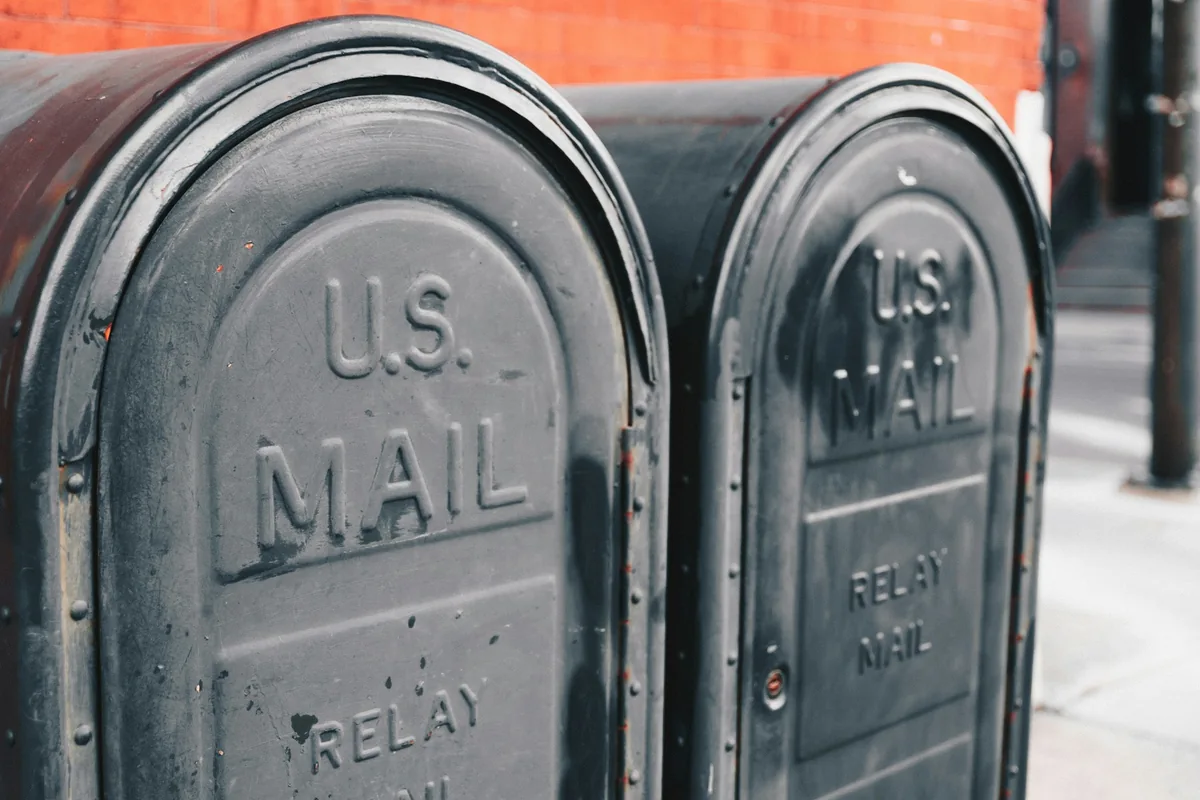
A secure place for your mail sounds like the obvious solution before moving. Yet a locked box in the United States does not automatically help you read a letter from another country.
That is the central difference in the virtual mailbox vs PO Box decision. Both can provide a place for mail to arrive. Only one is normally designed around managing the contents remotely. The right purchase depends on who can physically collect your mail and what you need to do with it afterward.
This guide compares the two arrangements as tools for living abroad. It does not rank every mailbox provider or suggest that either address replaces the residential information a bank or government agency may require.
At a Glance
| Question | Virtual mailbox | USPS PO Box |
|---|---|---|
| Where does mail go? | A commercial mail-handling location | A box at a Post Office |
| How do you read contents abroad? | Request scanning where offered | Arrange physical collection and separate handling |
| Who handles originals? | Provider under its service terms | You or an authorized collector |
| What drives cost? | Subscription, usage and physical services | Location, box size, term and outside help |
| Best starting use case | Ongoing remote administration | Reliable local collection |
What a PO Box Does Well
USPS describes a PO Box as a locked mailbox at a Post Office. Prices and sizes vary by location. Opening one includes an in-person identity-verification and key or combination collection step. USPS also offers street addressing at some locations, subject to its terms and restrictions.
That can be a good arrangement when a trusted person already passes the Post Office regularly. It keeps delivery separate from a household’s front doorstep and gives physical mail a predictable collection point.
However, check the exact office’s access and package procedures. A parcel that does not fit in the box may require a counter visit. Your helper’s schedule and the office’s opening hours become part of the service, even though they do not appear on the rental price.
What a Virtual Mailbox Adds
A virtual mailbox adds a remote-management layer. Depending on the provider and plan, you can see incoming envelopes and request scanning, storage, forwarding, or disposal. You are paying a business to perform tasks that would otherwise fall to you or someone helping you.
That additional layer matters when you change destinations or cannot predict your next U.S. visit. You do not need every piece of mail physically shipped to decide whether it deserves attention.
It also introduces a provider relationship. Someone else handles your documents, and you need to understand their privacy, retention, authentication, and cancellation practices. More convenience does not eliminate the need to choose carefully.
Envelope Previews Are Not Contents Scans
USPS Informed Delivery can provide previews of eligible incoming mail. That should not be confused with a service that opens a letter and sends you the pages inside.
A preview may tell you that correspondence is coming from an important sender. It may not tell you the deadline, amount, or requested action inside. If your decision depends on reading the letter, determine who will obtain the contents and how quickly.
This distinction is easy to miss because both arrangements can involve looking at mail on a screen. Ask one direct question: can I read the inside of this letter from abroad without contacting a friend? The answer often resolves the purchase decision.
Compare the Whole Annual Cost
For a PO Box, include the actual rental quote, collection effort, any payment or gift for your helper, and occasional forwarding. For a virtual mailbox, include subscription charges, scans, extra recipients, physical storage, and shipping.
Consider this hypothetical example: a PO Box arrangement costs $120 annually, while a remote mailbox costs $240 before extras. The visible difference is $120 a year. If the cheaper arrangement requires someone to make repeated special trips, the real trade-off is not merely ten dollars a month.
On the other hand, if a willing family member already collects mail nearby and you need only a few letters handled, the PO Box may be perfectly reasonable. Do not convert every favor into a sales argument for another subscription. Reliability and consent matter more than whether the arrangement is paid.
Match the Arrangement to Your Travel Pattern
For a short stay abroad, a simple temporary system may be enough. For an open-ended move, build something that remains workable when the initial excitement and willingness to help have worn off.
Frequent U.S. visits can make physical collection easier, but avoid assuming every important letter will arrive just before a trip. Ask what happens during the longest stretch when you will be absent.
If you travel between countries, also consider where originals can be delivered securely. A remote mailbox cannot make an unstable foreign delivery address reliable. Sometimes the right choice is to retain a document until you reach a confirmed destination.
Address Acceptance Is a Separate Decision
Neither option should be chosen as a way to pretend you live somewhere you do not. Ask each important sender whether it accepts your proposed address for correspondence and what residential information it separately requires.
A street-style address is not proof that every institution treats it as residential. Likewise, a provider advertising suitability for travelers cannot decide another company’s eligibility rules.
Before paying, list the institutions that matter most and confirm the relevant requirements. If one essential sender rejects the arrangement, solve that specific problem first. A beautiful comparison chart is irrelevant if the service cannot receive the mail you actually need.
Questions for the Person Collecting Your Mail
If you choose a PO Box with help, agree on collection frequency, urgent-message handling, permission to open particular items, and how documents will be transmitted securely. Make sure they know what to leave sealed.
Discuss absences. Who handles a letter if your collector is on vacation? Where will originals be stored? How will postage be reimbursed? These conversations protect the relationship and prevent a casual favor becoming an unspoken permanent responsibility.
If the answers feel uncomfortable or vague, a paid mail-handling service may be valuable precisely because it defines the work more clearly.
Before Committing to Either Option
Test the arrangement with something unimportant. Check the time from arrival to notification and from notification to reading. Then test the path for an original you need physically.
For a virtual service, use our virtual mailbox comparison to build a shortlist. The Traveling Mailbox plan review explains why page allowances and envelope counts deserve separate attention.
For a PO Box, obtain an actual quote from the specific USPS location. National examples are not a substitute for local availability or your collector’s practical access.
The BooksOfTay Life-Fit Test
Picture an important letter arriving on a Tuesday while you are abroad. Who notices it? Who reads it? How do you receive the contents? Who can send the original? How long can each step reasonably take?
If you cannot explain that chain without guessing, the arrangement is unfinished. Add the complete recurring cost to your BooksOfTay Move Planner only after the workflow makes sense.
The BooksOfTay Verdict
Choose a Virtual Mailbox If
You need ongoing remote control, have no reliable local collector, or prefer a professional relationship for handling private correspondence.
Choose a PO Box If
You have practical collection arrangements and mainly need a secure physical destination. Keep the process simple when your needs are genuinely simple.
Overall Recommendation
For an open-ended move without reliable local help, a virtual mailbox is usually the more complete tool. For readers with easy physical collection, a PO Box can remain a sensible option. Buy access to your mail, not just somewhere for it to accumulate.
Frequently Asked Questions
Does a PO Box automatically forward mail overseas?
Do not assume a rental includes an international forwarding workflow. Confirm the postal service options and any separate arrangement needed for collection and shipping.
Can someone else collect my PO Box mail?
USPS provides for authorized collection. Follow its current requirements rather than simply handing over access and assuming every item can be collected.
Is a virtual mailbox always more expensive?
Not necessarily once you include collection, scanning help, and shipping. Compare your actual annual workload and quotes.
Can either be my residential address?
A mailing arrangement is not automatically a residence. Provide truthful information and follow each institution’s requirements.
Your turn: Do you need a place for mail to arrive, or a way to read it without being there?
Sources
Facts checked October 6, 2026. Cost examples are illustrative.
Featured photograph by Ethan Hoover on Unsplash, used under the Unsplash License. Illustrative photograph; no endorsement by the people shown is implied.

Join the Conversation
Have experience with this destination or topic? Share your perspective or questions below. We’d love to hear from you.
Leave a Comment