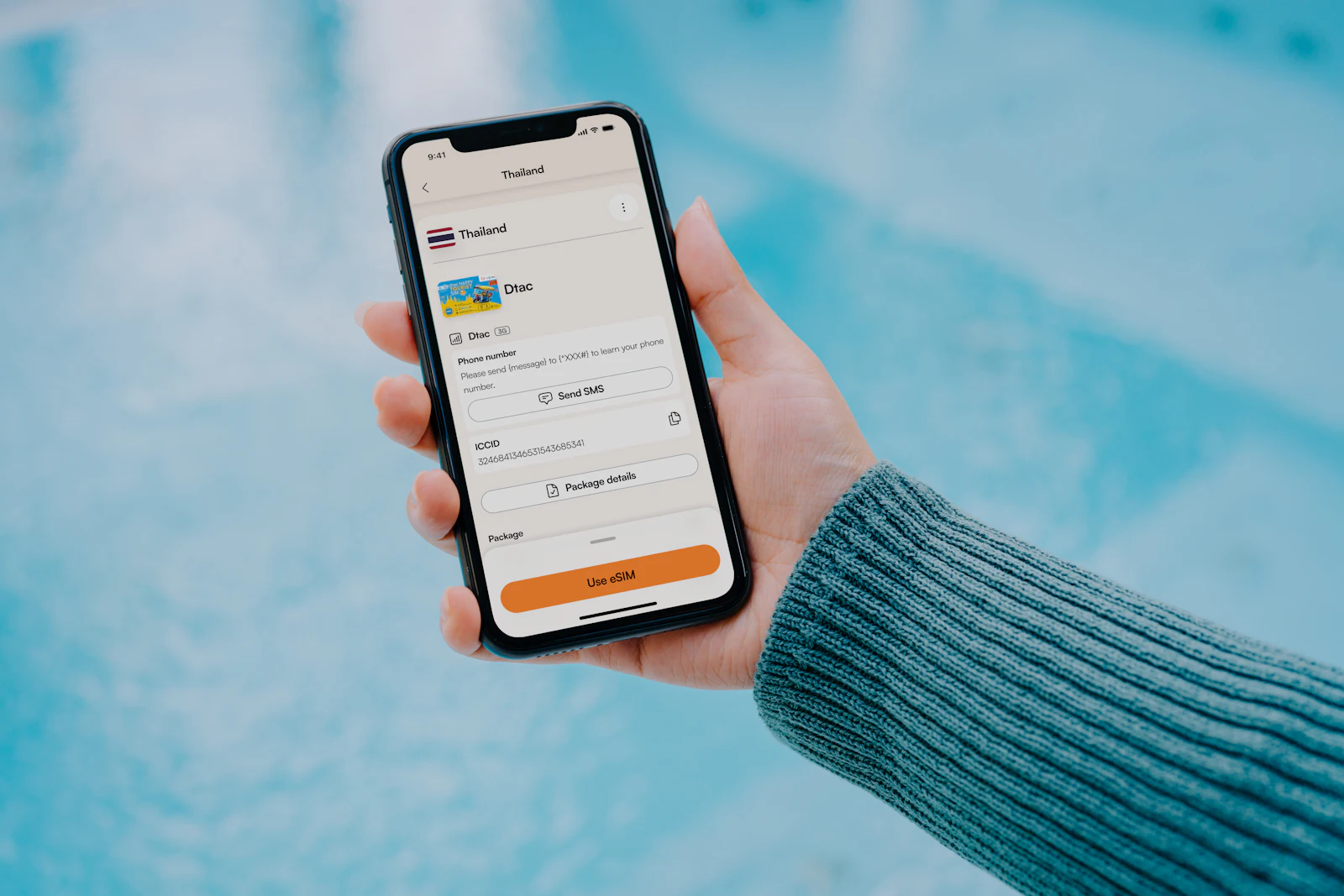
You can replace your SIM card in minutes. Replacing the phone number attached to your bank, email, and years of personal contacts can be much more complicated.
Keeping your U.S. phone number when moving abroad is really about keeping access to your life. A cheap phone plan has little value if it cannot receive the verification message you need when your bank challenges a login. A number parked somewhere is not necessarily a number that can receive calls or security texts.
The right setup depends on what the number does for you. Start with account access, then choose how you will get everyday data in your new country. Those do not have to be the same service.
At a Glance
| Option | Potential use | Main limitation to check |
|---|---|---|
| Keep a U.S. mobile line | Existing number and supported security texts | Overseas-use policy and charges |
| Port to Google Voice | Calls and messages over an internet connection | Not all numbers or verification texts supported |
| Park the number | Preserve ownership for later | Calls and texts may not be included |
| Local SIM or data eSIM | Everyday connectivity abroad | Does not automatically preserve your U.S. number |
| Dual-SIM setup | Separate home-number and local-data functions | Device, carrier, and destination compatibility |
Make a list of everything connected to your number
Before comparing plans, review your bank accounts, credit cards, email, password manager, employer tools, payment services, and healthcare accounts. Note which ones use SMS, voice calls, an authenticator app, passkeys, or another recovery method.
Do not assume that because an account accepts an email address it will never ask for a phone code. A new device, unusual login, or forgotten password can trigger different verification. Check the provider’s actual recovery options while you still have working access.
For each essential account, record where you would obtain help if you lost your phone. Store official support details securely, separately from the device. Avoid putting passwords, full card numbers, and recovery codes together in an unprotected travel document.
Separate keeping your number from buying data
Your U.S. number can handle communication while a local service handles maps, messaging apps, and everyday browsing. On a compatible dual-SIM phone, those functions can run through different lines. Device models and carrier restrictions differ, so check your exact phone rather than relying on a general claim about eSIM support.
Apple’s travel guidance explains that using a different carrier requires an unlocked iPhone. It also distinguishes local plans, which may include a local number, from data-only travel eSIMs. The same practical question applies whichever phone you own: what does the plan actually include?
A data-only product is not automatically a local calling service. You may still need a way to receive delivery calls or contact a local business. Conversely, preserving a U.S. number does not guarantee affordable mobile internet where you are moving.
Check the carrier’s long-term rules
A plan advertised for international travel may be intended for temporary trips. T-Mobile’s published international terms, for example, state that the service is not for extended international use and that primary usage must occur on its network in the United States. Treat this as a reason to read your own carrier’s policy, not as proof that every carrier has identical rules.
Ask about ongoing residence abroad, Wi-Fi calling, incoming texts, calls to local numbers, and any requirement to activate or periodically use the service in the United States. Request a link to the applicable plan terms. A vague promise that the phone works overseas is not enough for a long-term move.
Calculate the cost over your expected stay, including any roaming pass you would actually need. Avoid solving one arrival day with an expensive recurring plan you will keep paying for out of habit.
Understand Google Voice before porting
Google Voice can be convenient for calls and messages over an internet connection, but its suitability depends on your use case. Google’s personal-account porting guidance says not all mobile numbers qualify, that eligible U.S. port requests must be made and updated in the United States, and that porting in carries a $20 fee at the time checked.
More importantly, Google says some banks and subscription services will not send messages to Voice numbers. A friend receiving your text is not a test of your bank’s verification system. If banking codes are essential, ask each bank about supported methods and establish an alternative before making a change.
Porting can also end the old carrier service associated with that number. Google advises not canceling the existing plan before the port completes. If you share an account with family, check the effect on other lines, device financing, and discounts first.
Run a departure test while help is nearby
Give yourself enough time to fix problems. Do not schedule a number transfer for the night before an international flight. Test the setup on the actual phone you will carry, using the methods your providers permit.
- Place and receive an ordinary call.
- Send and receive a standard text message.
- Confirm important accounts have working recovery options.
- Test an available non-SMS authentication method where supported.
- Check which SIM supplies mobile data and which line makes calls.
- Confirm emergency calling arrangements for your destination.
A home test cannot reproduce every overseas condition, but it can reveal avoidable mistakes. Keep a backup means of accessing essential accounts rather than treating one successful test as a permanent guarantee.
Protect against losing the phone itself
A dual-SIM setup still lives in one physical device. If that phone disappears, both lines can become unavailable at once. Think about account recovery, carrier access, and your password manager from another trusted device.
Enable the device’s supported security features and keep software updated. Use a screen lock you can remember without storing it beside the device. Keep recovery codes in a secure location you can access independently, following each service’s guidance.
Do not share verification codes with someone who calls claiming to be support. If an issue occurs, reach the provider through its official app or a verified contact you saved. Travel stress makes urgent, plausible messages more convincing.
Budget for continuity rather than the cheapest headline
Suppose a verified mobile setup costs $12 a month more than a number-parking service. Over six months, the difference is $72. That is an illustrative calculation, not a provider quote. Decide whether the cheaper option actually covers calls and authentication before calling it a saving.
Treat your U.S. line, local data, and occasional calling charges as one communication category in your monthly budget. Keep activation or porting charges under one-time setup costs. The Move Planner can help you keep those two totals separate.
The BooksOfTay Life-Fit Test
Can you name your three most important accounts and how you would recover each without SMS? Does your intended carrier permit the length of overseas use you need? Is your phone compatible and unlocked where necessary? Have you checked whether the local data plan includes calls? Can you get help without the phone in your hand?
If these questions are unanswered, do the account-access work before choosing the cheapest provider. The best arrangement is the one that stays manageable during an ordinary week and during a problem.
The BooksOfTay Verdict
Keep an eligible mobile line if
Your essential accounts rely on supported mobile-number verification, and you have confirmed the carrier’s terms fit your stay. Pair it with suitable local data when that improves cost and coverage.
Consider an internet-based number if
Your main need is personal communication and you have confirmed every important account has another reliable authentication route. Understand number eligibility, porting consequences, and service limitations before switching.
Overall Winner
For a first move, continuity wins. Preserve working access until the replacement is proven, and change one part of the system at a time. Cutting your phone bill should not cut you off from your money.
Frequently Asked Questions
Will a travel eSIM keep my U.S. phone number?
Not by itself. It provides the service described in its plan. Keeping your existing number requires maintaining or transferring that number separately.
Can I receive every bank code with Google Voice?
No. Google says some banks and other services do not send texts to Voice numbers. Confirm your bank’s supported verification options directly.
Should I cancel my old phone plan first?
Not if you are transferring the number. Follow the new provider’s porting instructions and confirm completion before canceling anything yourself.
Can I use Wi-Fi calling abroad for free?
Charges and availability depend on the carrier, plan, destination, and number you call. Verify the terms; Wi-Fi does not automatically make every call free.
Your turn: Which part worries you most: keeping your number, receiving bank codes, or avoiding roaming charges?
Sources
Checked October 5, 2026. Confirm your exact account, device, and plan before switching.
- Google Voice number porting
- Google Voice texting limitations
- Apple travel eSIM guidance
- T-Mobile international-use terms
Featured photograph by Airalo on Unsplash, used under the Unsplash License.

Join the Conversation
Have experience with this destination or topic? Share your perspective or questions below. We’d love to hear from you.
Leave a Comment