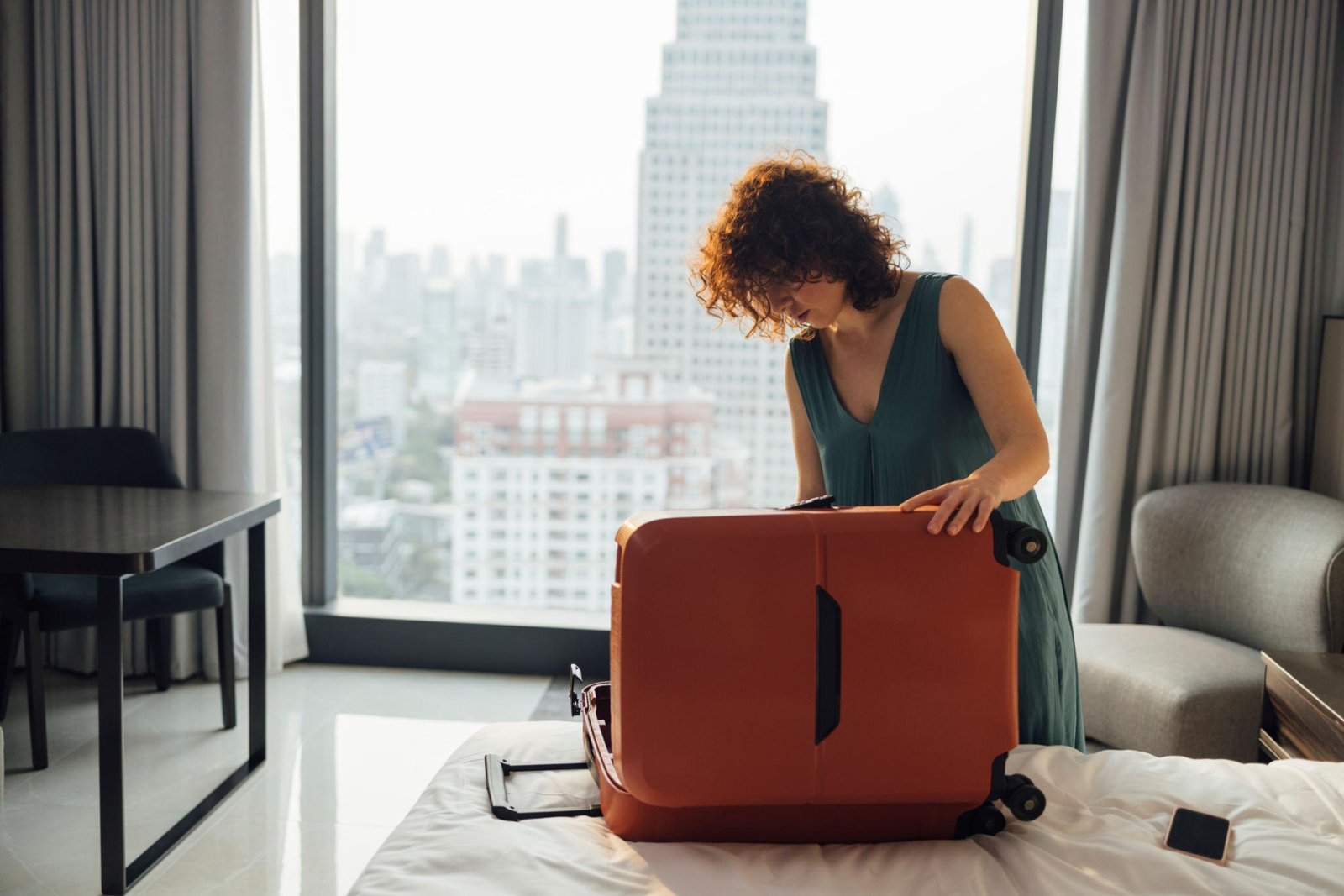
There’s a moment when moving abroad stops being an idea and starts becoming real.
Maybe you’ve spent months watching videos.
Researching countries.
Comparing apartments.
Checking flights.
Looking at cost-of-living numbers.
Imagining what your life could look like somewhere else.
And then a thought hits you:
“Wait… I’m actually going to do this alone.”
No family coming with you.
No group of friends waiting at the airport.
No partner helping you figure everything out.
Just you.
Your luggage.
Your money.
Your decisions.
And a country that doesn’t know you yet.
That can be incredibly exciting.
It can also be terrifying.
But moving abroad alone doesn’t mean you need to be fearless.
You need to be prepared.
Because living abroad alone isn’t just about learning how to travel by yourself.
You’re building an entirely new everyday life.
And there are some things you should understand before you go.
In This Article
- Moving Abroad Alone Isn’t the Same as Traveling Alone
- 1. Your First Priority Is Financial Stability
- Always keep enough money to leave.
- 2. Don’t Move Somewhere Just Because It’s Cheap
- 3. Your Neighborhood May Matter More Than Your Country
- Don’t sign a one-year lease before you’ve seen the area yourself.
- 4. The Loneliness Can Be Real
- 5. Don’t Wait Until You’re Lonely to Make Friends
- 6. Learn Some of the Language
- 7. Safety Becomes Your Responsibility
- 8. Your Phone Becomes One of Your Most Important Tools
- 9. Don’t Keep All Your Money in One Place
- 10. Your First Apartment Doesn’t Need to Be Your Forever Apartment
- 11. You Need a Routine Faster Than You Think
- 12. Homesickness Doesn’t Automatically Mean You Made a Mistake
- 13. Stay Connected to Home — But Don’t Live There Digitally
- 14. You Will Become More Capable
- The unfamiliar becomes normal.
- 15. But Independence Doesn’t Mean Doing Everything Alone
- What Should You Have Before Moving Abroad Alone?
- Safety
- Should You Move Abroad Alone If You’re Scared?
- Where your plan is weak.
- What If Nobody Supports Your Decision?
Moving Abroad Alone Isn’t the Same as Traveling Alone
This is the first thing people need to understand.
Traveling somewhere alone for two weeks can feel incredible.
You wake up.
Explore.
Eat somewhere new.
Take pictures.
Meet travelers.
Visit attractions.
Go home.
Living there is different.
Eventually you need to:
Pay rent.
Buy groceries.
Do laundry.
Work.
Exercise.
Get sick.
Deal with paperwork.
Fix something in your apartment.
Navigate transportation.
Make friends.
Spend nights at home.
And figure out what you’re doing on a random Wednesday.
That’s living abroad.
The excitement eventually becomes normal life.
And that’s not a bad thing.
That’s actually the point.
You’re not trying to stay on vacation forever.
You’re trying to build a life.
1. Your First Priority Is Financial Stability
When you’re moving alone, there’s no second income automatically sitting beside you.
That’s important.
If your income stops:
Your income stops.
If an emergency happens:
Your emergency fund handles it.
If your rent suddenly increases:
You handle it.
This doesn’t mean you need to be rich before moving abroad.
But I would want three things figured out.
Reliable Income
Where is your money coming from?
Remote job?
Business?
Freelance work?
Investments?
Pension?
Savings?
Some combination?
Don’t build your entire relocation around:
“I’ll figure out how to make money when I get there.”
Unless your immigration status legally allows local employment and you’ve deliberately planned for that.
Emergency Fund
Your emergency fund should be separate from your normal monthly spending money.
Because emergencies abroad can involve things like:
Unexpected flight home.
Medical expenses.
Replacing a laptop.
Moving apartments.
Visa complications.
Job loss.
Family emergency.
Exit Money
This is something people don’t talk about enough.
Always keep enough money to leave.
Moving abroad isn’t a prison sentence.
If something goes seriously wrong, you should be able to:
Buy a flight.
Pay for temporary accommodation.
Move somewhere else.
Or return home.
Your freedom increases when you’re not financially trapped.
2. Don’t Move Somewhere Just Because It’s Cheap
We’ve talked about this throughout BooksofTay.
But it matters even more when you’re moving alone.
Imagine finding an apartment for:
$400 a month.
Sounds incredible.
But what if it’s:
Far from everything?
In an area where you don’t feel comfortable?
An hour from the places where people socialize?
Somewhere you need a car?
Isolated from other people?
Then your cheap apartment could make your life considerably harder.
When you’re alone, location becomes extremely important.
I would gladly pay a little more to live somewhere that gives me easier access to:
Groceries.
Gym.
Cafés.
Restaurants.
Transportation.
Healthcare.
Parks.
Social activities.
And places where I can actually meet people.
Cheap isolation isn’t necessarily a bargain.
3. Your Neighborhood May Matter More Than Your Country
This is becoming one of the most important BooksofTay principles:
Country → City → Neighborhood → Apartment → Routine
When you’re moving abroad alone, I’d add another layer:
Community.
Your country can be amazing.
Your city can be beautiful.
But if your neighborhood makes everyday life difficult, your experience can still be miserable.
Before renting somewhere long term, investigate:
Can I walk to anything?
How do I get groceries?
Where’s the nearest hospital?
Where’s the gym?
How do I get home at night?
Is transportation nearby?
What does the area feel like after dark?
Are there cafés or restaurants?
Would I actually enjoy spending time around here?
And if possible:
Don’t sign a one-year lease before you’ve seen the area yourself.
Start with temporary accommodation.
Learn the city.
Then decide.
4. The Loneliness Can Be Real
This is probably the part social media doesn’t show enough.
You might arrive feeling incredible.
New country.
New apartment.
New food.
New experiences.
Everything feels exciting.
Then a few weeks pass.
You finish work.
Close your laptop.
And your apartment is quiet.
Your friends back home are busy.
Your family is sleeping because of the time difference.
You don’t know anyone well enough to call.
And suddenly:
You’re alone.
Loneliness and homesickness are common challenges discussed in expat-relocation guidance, especially when someone moves without an existing support network.
That doesn’t mean moving abroad alone is a mistake.
It means you shouldn’t assume a social life will magically appear.
You have to build one.
5. Don’t Wait Until You’re Lonely to Make Friends
This is huge.
If you arrive and spend your first two months:
Working from home.
Ordering delivery.
Watching Netflix.
Going to the gym with headphones on.
And talking only to people back home…
you can live in a city of ten million people and still feel completely isolated.
You need repetition.
Go somewhere regularly.
Same gym.
Same café.
Same coworking space.
Same language class.
Same hobby group.
Same sports club.
Same dance class.
Whatever fits you.
Because friendships usually don’t happen because you walked into a bar once.
They happen because:
You keep seeing the same people.
Existing relocation guidance similarly recommends intentionally meeting both locals and other expats rather than relying exclusively on one group.
You need community.
Not just company.
6. Learn Some of the Language
Do you need to become fluent before moving?
No.
But learning basic local language can completely change your experience.
Start with:
Hello.
Thank you.
Please.
Excuse me.
How much?
Where is…?
I need help.
I don’t understand.
Numbers.
Food.
Directions.
Transportation.
Basic emergency language.
Then keep learning.
Because language does something beyond making transactions easier.
It opens the country.
You start understanding jokes.
Conversations.
Menus.
Signs.
People.
Culture.
And suddenly you’re not experiencing the country entirely through an English-speaking bubble.
Language learning is also commonly recommended as a way to integrate more deeply into the local community.
7. Safety Becomes Your Responsibility
When you’re traveling or living alone, nobody automatically knows:
Where you are.
Who you’re meeting.
When you’re supposed to come home.
So create systems.
Not paranoia.
Systems.
Know which neighborhoods you should avoid.
Research common scams.
Don’t casually tell strangers exactly where you live.
Understand local transportation.
Be careful with excessive drinking when you’re alone.
Know how you’re getting home before going out.
Keep emergency cash available.
Keep copies of important documents.
Know the local emergency numbers.
Have travel or health insurance appropriate for your situation.
Tell someone you trust when you’re doing something unusual.
And when dating:
Meet publicly first.
These aren’t reasons to be afraid.
They’re habits that reduce unnecessary risk.
8. Your Phone Becomes One of Your Most Important Tools
Living abroad makes you realize how much your phone does.
Maps.
Translation.
Banking.
Transportation.
Food delivery.
Messaging.
Airline tickets.
Accommodation.
Emergency communication.
Two-factor authentication.
Government apps.
Your phone can become your:
Life-management device.
So prepare for losing it.
Know how you’ll access:
Your email.
Your bank.
Your passwords.
Your authentication codes.
Your important contacts.
Your passport copy.
Your insurance information.
If your phone disappeared tomorrow:
Could you still function?
That’s the question.
9. Don’t Keep All Your Money in One Place
Imagine this:
Your bank blocks your card.
You’re overseas.
It’s Friday night.
Customer service can’t solve it immediately.
And that’s your only card.
Now what?
Have redundancy.
For example:
Primary bank account.
Backup account.
Primary debit card.
Backup card.
Emergency cash.
And possibly a credit card if appropriate for your financial situation.
Keep them separately.
Because two cards inside the same stolen wallet aren’t really two backup systems.
Redundancy creates freedom.
10. Your First Apartment Doesn’t Need to Be Your Forever Apartment
This is where people make expensive mistakes.
They watch:
Apartment tours.
Neighborhood videos.
TikToks.
YouTube.
Google Maps.
And think:
“That’s where I’m living.”
Then they arrive.
And realize:
Traffic is terrible.
The building is noisy.
The neighborhood is dead at night.
The grocery store is far away.
Internet is unreliable.
They hate the commute.
Or they simply don’t like the area.
So don’t rush.
Your first accommodation can be:
Research headquarters.
Stay temporarily.
Explore neighborhoods.
Tour apartments.
Test transportation.
Visit at night.
Check internet.
Then choose.
You’re not wasting money by waiting.
You’re buying information.
11. You Need a Routine Faster Than You Think
Vacation mode feels amazing.
For a while.
Then your days start blending together.
This is especially dangerous if you work remotely.
Wake up.
Laptop.
Food delivery.
YouTube.
Sleep.
Repeat.
That’s not why you moved abroad.
Build anchors into your day.
Maybe:
Morning walk.
Gym.
Work.
Lunch outside.
Language study.
Evening activity.
Weekend exploration.
Your routine doesn’t need to be exciting.
It needs to make your life feel:
Stable.
Routine turns a foreign country into somewhere you actually live.
12. Homesickness Doesn’t Automatically Mean You Made a Mistake
This is important.
There may be days when you miss:
Your family.
Your friends.
Your food.
Your routines.
Your bed.
Your old neighborhood.
Even things you used to complain about.
Relocation guidance commonly warns solo movers to expect homesickness and an adjustment period rather than assuming they will immediately feel settled.
That feeling doesn’t automatically mean:
“I need to go home.”
Sometimes it means:
“I’m adjusting.”
Give yourself time before making major decisions during an emotional low.
At the same time, don’t force yourself to remain somewhere you genuinely dislike simply because moving home feels like failure.
It isn’t.
You tested something.
You learned.
You can choose again.
13. Stay Connected to Home — But Don’t Live There Digitally
You should absolutely stay connected with:
Family.
Friends.
People who matter to you.
Video calls.
Messages.
Group chats.
Birthdays.
Holidays.
Those relationships don’t need to disappear because you moved.
But there’s another extreme.
You can physically live in Thailand while mentally living in Florida.
Wake up.
Talk only to Americans.
Watch only American content.
Eat only familiar food.
Spend every night on FaceTime.
Never learn Thai.
Never meet locals.
Never build relationships.
Never integrate.
Then wonder:
“Why doesn’t this place feel like home?”
Because part of you never arrived.
Keep your old relationships.
But build new ones too.
14. You Will Become More Capable
Something interesting happens when you’re the person responsible for everything.
You figure things out.
The first time something goes wrong, you may panic.
Eventually:
You solve it.
You navigate the airport.
You find an apartment.
You negotiate something.
You learn transportation.
You visit a doctor.
You handle immigration.
You make friends.
You learn enough language to solve a problem.
And slowly:
The unfamiliar becomes normal.
Moving abroad alone can teach you something powerful:
You can build a life somewhere completely unfamiliar.
That confidence follows you.
15. But Independence Doesn’t Mean Doing Everything Alone
This distinction matters.
Being independent doesn’t mean:
Never asking for help.
Never needing people.
Never feeling lonely.
Never calling family.
Never hiring someone.
Never admitting you’re confused.
That’s not independence.
Independence is knowing you can take responsibility for your life while still building support around you.
Create relationships with:
Friends.
Neighbors.
Coworkers.
Other expats.
Locals.
Landlord or property manager.
Doctors.
Service providers.
People you trust.
You moved alone.
You don’t need to remain alone.
What Should You Have Before Moving Abroad Alone?
Here’s my minimum checklist.
Money
Reliable income.
Emergency savings.
Exit money.
Backup payment method.
Legal
Passport.
Correct visa or residency status.
Copies of important documents.
Understanding of local immigration rules.
Housing
Temporary accommodation first if possible.
Neighborhood research.
Reliable internet.
Healthcare
Insurance plan.
Nearby hospital identified.
Important prescriptions handled.
Communication
Local SIM/eSIM plan.
Backup access to important accounts.
Emergency contacts.
Safety
Understanding of local scams.
Transportation plan.
Emergency numbers.
Community
At least a basic plan for meeting people.
Mindset
Understanding that:
Some days are going to suck.
That’s true anywhere.
Should You Move Abroad Alone If You’re Scared?
Being scared isn’t necessarily a reason not to go.
Think about what the fear is telling you.
Are you scared because:
You’ve never done it before?
That’s normal.
Are you scared because:
You don’t have enough money?
Fix the money first.
Are you scared because:
You haven’t researched the country?
Research it.
Are you scared because:
You don’t know anyone?
Create a community plan.
Are you scared because:
Your visa situation is unclear?
Solve that before moving.
Fear can sometimes be useful.
It can show you:
Where your plan is weak.
Strengthen those areas.
Who Should NOT Move Abroad Alone Yet?
I’d wait if:
You have no reliable income.
You have virtually no emergency savings.
You don’t understand how you’ll legally stay.
You’re moving entirely to escape a temporary problem.
You’re expecting the country itself to make you happy.
You’re unwilling to adapt culturally.
You haven’t researched healthcare.
You have no exit plan.
Or you’re financially dependent on something extremely unstable.
Waiting doesn’t mean giving up.
It means:
Preparing properly.
There’s a difference between:
Being afraid to move.
and
Not being ready to move.
Know which one you’re dealing with.
What If Nobody Supports Your Decision?
This can be one of the hardest parts.
Family may say:
“Why would you leave?”
Friends may say:
“That’s crazy.”
Someone may tell you:
“You’ll be back in six months.”
Sometimes they’re worried about you.
Sometimes they don’t understand why you want something different.
And sometimes:
Your decision makes them uncomfortable because they wouldn’t make it themselves.
Listen when people raise legitimate concerns.
Safety.
Money.
Visa.
Employment.
Healthcare.
Those deserve answers.
But you don’t need everyone to understand the life you’re trying to build.
Because ultimately:
You’re the person who has to live it.
Don’t Burn the Bridge Behind You
I strongly believe in this.
You don’t need to destroy your old life to prove you’re committed to your new one.
Keep relationships.
Protect your finances.
Maintain important accounts where legally appropriate.
Keep documentation organized.
Don’t unnecessarily create problems back home.
Have somewhere you can go during an emergency if possible.
Because freedom isn’t:
“I can never go back.”
Freedom is:
“I have choices.”
The BooksofTay Solo Move Test
Before buying the one-way ticket, ask yourself:
1. Can I financially support myself?
2. Do I have emergency money?
3. Do I understand my visa?
4. Have I researched the city—not just the country?
5. Do I know which neighborhoods I’m considering?
6. Do I have a healthcare plan?
7. Do I have backup access to money?
8. Do I have an exit plan?
9. Do I have a strategy for meeting people?
10. Am I willing to be uncomfortable while I adjust?
If you can confidently answer those questions:
You’re much closer to being ready.
Moving Alone Can Be the Beginning, Not the Destination
You may board the plane alone.
That doesn’t mean your life abroad will remain that way.
You might find:
Friends.
Community.
Relationships.
Business partners.
Neighbors who become family.
A favorite café where everyone knows you.
A gym where people recognize you.
A neighborhood that starts feeling familiar.
Eventually:
The confusing streets make sense.
The grocery store feels normal.
You stop checking Google Maps every five minutes.
You have your barber.
Your restaurant.
Your routine.
Your people.
And something strange happens.
The place you once called:
“abroad”
starts becoming:
“home.”
That’s the part you can’t completely research.
You have to live it.
You Don’t Need to Know How the Whole Story Ends
Maybe you’ll live there for:
Six months.
Two years.
Ten years.
Maybe you’ll eventually move somewhere else.
Maybe you’ll return home.
Maybe you’ll discover another country you love even more.
You don’t need to know yet.
You just need to know:
What chapter comes next?
Prepare.
Save.
Research.
Build your systems.
Then, when you’re ready:
Go.
And remember the rule we’ve been building BooksofTay around:
Don’t test the vacation. Test the life.
Because moving abroad alone isn’t about running away from your old life.
At its best:
It’s about discovering how much of a new one you’re capable of building.
And that new life might start with something as simple as:
One person.
One suitcase.
One flight.
One new chapter.
Visa, residency, tax, healthcare and employment rules vary by country and change over time. This article provides general informational guidance rather than individualized immigration, legal, tax, medical or financial advice. Verify current requirements with official authorities and qualified professionals where appropriate before relocating.


Join the Conversation
Have experience with this destination or topic? Share your perspective or questions below. We’d love to hear from you.
Leave a Comment